


How to Use a Cast Iron Juicer for Fresh Citrus at Home
Many commercial juices contain preservatives, added sugars, or flavor enhancers that dull the brightness of real citrus. Even “fresh” options often sit on shelves long enough to lose their vibrancy.
At the same time, there’s been a steady return to scratch cooking and manual kitchen tools. Home cooks are choosing fewer gadgets, better tools, and more control over what goes into their food. That’s where manual citrus juicers, especially cast-iron models, come back into focus.
Despite the rise of electric appliances, cast-iron juicers remain popular because they extract fresh citrus juice efficiently, quietly, and consistently. So if you’ve ever wondered how to use a cast-iron juicer correctly or how to get the most juice without bitterness, this guide is for you. We’ll cover everything from technique and maintenance to choosing the right juicer, so you can enjoy fresh citrus at home with confidence using a reliable manual citrus juicer.
What Is a Cast Iron Juicer and How Does It Work?
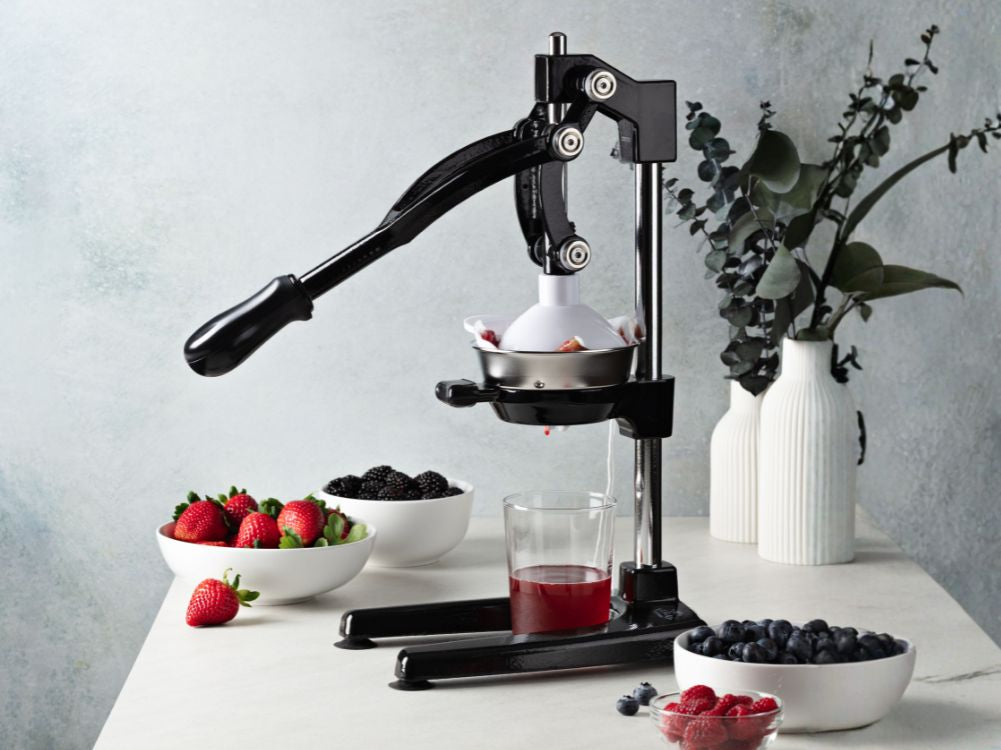
A cast-iron juicer is a manual citrus press designed to extract juice using downward pressure rather than hand strength. Unlike handheld squeezers or electric machines, it relies on leverage and weight to do most of the work for you. Most cast-iron juicers share three essential components:
- A heavy base: The weight of cast iron keeps the juicer stable on the counter, preventing slipping or tipping while you press.
- A pressing arm: This long handle multiplies force, allowing you to extract juice efficiently without straining your hands or wrists.
- A reamer or cone: The cone presses into the cut citrus, breaking down the pulp and releasing juice while separating seeds and rind.
When you pull the handle down, the combination of gravity, leverage, and pressure squeezes juice from the fruit more evenly than hand-powered tools. Compared to electric juicers, cast iron models offer more control, less noise, and easier cleanup.
Benefits of Using a Cast Iron Juicer at Home
There are a few quiet perks that don’t show up on a product page. A manual press doesn’t need an outlet or permission from the household to make noise. It just works, even at dawn, even in an apartment where every sound has an audience. Cast iron also behaves like it expects to be around awhile. With a little care, these presses stick around for decades, aging more like cookware than appliances.
And because the juice isn’t whipped through blades or overworked against the peel, the flavor stays clean. Taken together, it’s a small argument for slowing down: fresh juice, no buzz of machinery, nothing between you and the fruit but your own two hands.
What Citrus Fruits Can You Juice With a Cast Iron Juicer?
A cast-iron juicer is highly versatile and works well with nearly all common citrus fruits.
You can easily juice lemons, limes, oranges, and grapefruits. For harder citrus like lemons and limes, firm downward pressure is usually enough. Softer fruits such as oranges and grapefruits may benefit from a slower press to avoid splashing and bitterness.
Because of the stability and control cast iron provides, these juicers are ideal for drinks, cooking, and baking. They’re frequently used for cocktail prep, salad dressings, citrus marinades, and desserts where precision matters.
How to Use a Cast Iron Juicer Properly
Using a cast iron juicer is straightforward, but technique makes a big difference in juice yield and flavor. Many experienced users also add a mesh bag over the cone to catch seeds and excess pulp, especially when juicing for cocktails or baking.

Step 1: Prepare the fruit
Wash your citrus thoroughly to remove wax or residue. Slice it in half horizontally rather than lengthwise this exposes more juice-bearing cells.
Step 2: Position the citrus correctly
Place one half cut-side down on the reamer. If using a mesh bag, position it over the cone before placing the fruit.
Step 3: Apply steady pressure
Pull the handle down slowly and firmly. Avoid slamming or forcing it. Steady pressure extracts more juice and protects the peel.
Step 4: Release and rotate if needed
Lift the handle and rotate the fruit slightly, then press again to extract remaining juice.
Step 5: Collect juice and strain seeds
The mesh bag helps strain seeds automatically, but you can also pour juice through a fine strainer if needed. To avoid bitterness, don’t over-press once the peel is fully flattened. Beginners often make the mistake of forcing every last drop, which releases oils from the rind.
How to Get the Most Juice Without Bitter Flavor
Bitterness usually comes from excessive pressure or improper cutting. Cutting citrus crosswise exposes more pulp and reduces stress on the peel.
Using room-temperature fruit also helps. Cold citrus yields less juice because the membranes are tighter. Rolling fruit gently on the counter before juicing can further loosen internal fibers.
Apply pressure gradually, stopping once resistance increases. Over-pressing extracts bitter oils from the rind rather than additional juice.
Cast Iron Juicer vs Other Citrus Juicers
When comparing options, the difference between cast-iron juicers and other types becomes clear.
Cast iron vs handheld squeezer
Handheld tools are portable but require grip strength and can fatigue hands quickly. Cast iron juicers offer leverage, consistency, and speed, especially when juicing multiple fruits.

Cast iron vs electric juicers
Electric juicers are fast but noisy, harder to clean, and less durable long-term. Cast iron models are quieter, easier to maintain, and offer better control.
Cast-iron juicers are best for home cooks who value quality, longevity, and versatility over convenience gadgets.
How to Clean the Cast Iron Juicer After Use
Cleaning your cast iron juicer properly ensures it lasts for years without rust or flavor transfer.
Rinse immediately after use with warm water, but not hot. Remove pulp and seeds using a soft brush if needed. Avoid soaking, as water can seep into microscopic pores.
Dry thoroughly with a lint-free towel, then apply a very light coat of food-safe oil to protect the surface. Proper drying is what prevents rust.
Choosing the Right Cast Iron Juicer for Home Use
Not all cast iron juicers are created equal, and choosing the right one can make a noticeable difference in both performance and enjoyment. The first thing to look for is weight. A heavier cast iron juicer provides natural stability, allowing you to press firmly without the base shifting or tipping. This is especially important when juicing harder citrus like lemons or when working through several fruits at once.
One reliable option worth considering is the Zulay Kitchen Manual Juice Press. This cast iron juicer strikes an excellent balance between performance and simplicity. Its solid cast iron construction provides the weight and stability needed to extract juice efficiently from lemons, limes, and oranges without slipping or shaking. The ergonomic handle and thoughtful design make pressing feel smooth and controlled, reducing hand fatigue even when juicing multiple fruits.

If you want an even more heavy-duty option that comes with extra tools you’ll actually use, the Zulay Kitchen Pulperizer 9-in-1 Cast Iron Juicer takes versatility to the next level. Designed for home cooks and culinary enthusiasts alike, this model combines the durability of cast iron with multiple attachments and functions beyond basic juicing. Like its counterpart, it benefits from a robust base and leverage-optimized pressing arm, but its expanded functionality makes it ideal for households that juice frequently or enjoy exploring recipes that call for fresh citrus.
Final Thoughts
Using a cast-iron juicer is one of the simplest ways to elevate everyday cooking and drinks. It offers control, durability, and consistent results without relying on electricity or disposable parts.
Once you grasp the technique, fresh citrus becomes effortless, whether you’re making lemonade, cocktails, or cooking from scratch. Investing in a quality manual juicer turns fresh juice into a daily habit instead of an occasional luxury. And if you’re ready to experience better flavor and smarter tools, exploring the latest citrus essentials from Zulay Kitchen makes that upgrade easy.
Shop the Zulay Kitchen Citrus Collection »



Leave a comment
This site is protected by hCaptcha and the hCaptcha Privacy Policy and Terms of Service apply.