

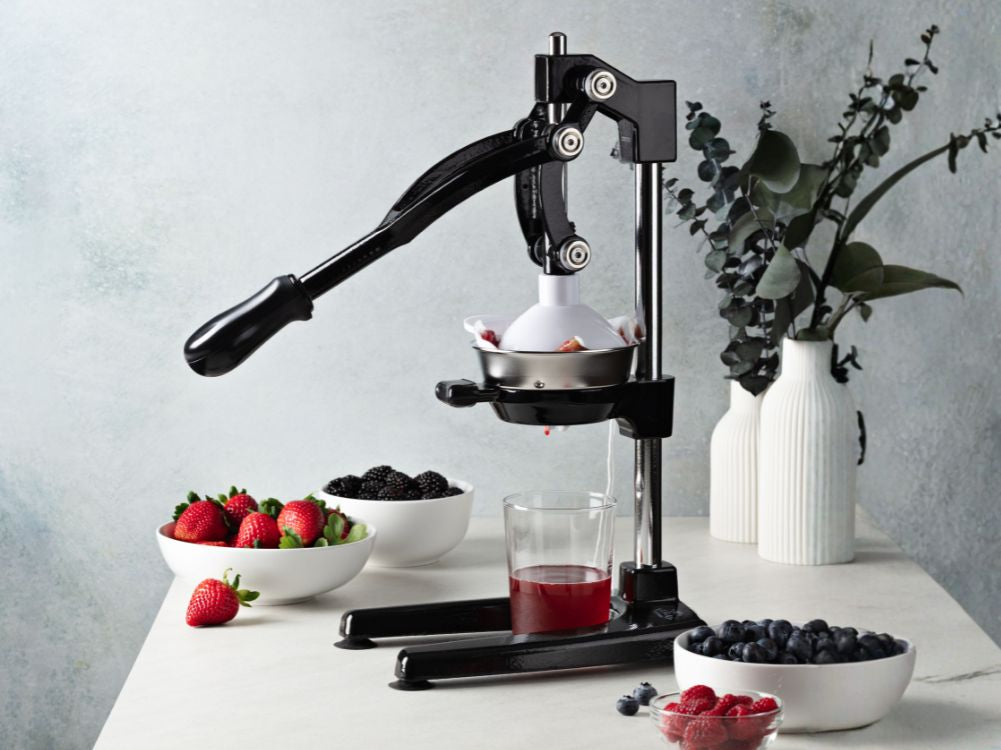
How to Clean Your Cast Iron Juicer
A cast-iron juicer is one of those kitchen tools that has endured not because it’s trendy, but because it works. In fact, cast iron cookware dates back more than 2,000 years, with early versions appearing in ancient China during the Han Dynasty, where cast iron was first developed for both agricultural and domestic purposes. In American kitchens, cast iron presses, grinders, and juicers were especially common in the late 19th and early 20th centuries, when manual food preparation tools dominated soda fountains, bakeries, and home pantries.
Cast iron, however, is a reactive material. Acidic citrus juice, lingering moisture, and improper drying can compromise its surface, leading to rust, metallic flavors, or a shortened lifespan. The upside is that cast iron is also remarkably resilient. With proper cleaning and basic maintenance, a citrus press cast-iron tool can last for decades, often improving with age as its surface becomes smoother and more naturally seasoned over time.
This guide explains exactly how to clean, maintain, and protect your cast iron juicer while also showing how to get the most out of it for everyday uses, from lemonade, cocktails or even in meal prep. With the right care, this centuries-old material continues to prove why it belongs in modern kitchens.
Why Cast Iron Juicers Are Different From Other Citrus Tools
A hand juicer cast-iron model behaves very differently from plastic citrus reamers, stainless steel squeezers, or electric machines. Cast iron is porous, reactive, and incredibly durable, but only when treated correctly. Cast iron juicers are often chosen because they are:
-
- Heavier and more stable than handheld squeezers
- Powerful enough to juice lemons, limes, oranges, and grapefruits
- Ideal for fresh juice without machine noise or cleanup
- Built for repeated pressure without cracking or flexing
That weight is why many people consider a heavy-duty citrus juicer the best option for frequent juicing. However, citrus juice is acidic, and acidity accelerates oxidation when moisture lingers on cast iron. This is why cleaning a cast-iron juicer is less forgiving than cleaning stainless steel or plastic tools. Understanding this difference is the foundation of proper care.
Common Cleaning Mistakes That Damage a Cast Iron Juicer
Most damage happens unintentionally. People treat a cast-iron juicer like any other kitchen citrus tool, assuming soap, soaking, or air-drying is harmless.
The most common mistakes include soaking the juicer in water, putting it in the dishwasher, or leaving citrus residue to dry on the surface. Acid plus moisture is the fastest path to rust. Another issue is aggressive scrubbing with steel wool, which strips protective seasoning and exposes raw iron.
Skipping oiling after cleaning is another common oversight. Cast iron relies on a thin oil layer to block moisture from the surface. Without it, even a properly dried juicer can develop rust over time. These mistakes don’t mean cast iron is high-maintenance; it just simply follows different rules.
How to Clean a Cast Iron Juicer After Each Use
To be fair, routine cleaning is the single most important habit for preserving a manual juice press, and the process is far simpler than many people expect. When done correctly, daily cleaning takes just a few minutes and prevents nearly every common issue associated with cast iron, including rust, staining, and lingering citrus odors.

1. Clean Immediately After Use
Always clean your cast iron juicer right after juicing, before citrus pulp and juice have time to dry and adhere to the surface. Dried citrus sugars become sticky and acidic, making them harder to remove and more likely to damage the iron over time. Immediate cleaning minimizes scrubbing and protects the juicer’s finish.
2. Remove Pulp and Seeds Gently
Begin by clearing away seeds and pulp using your hands or a soft utensil. Avoid metal tools or abrasive scrapers, which can scratch the surface and strip protective seasoning. Gentle removal preserves the integrity of the cast iron while keeping cleanup efficient.
3. Rinse Briefly With Warm Water
Rinse the juicer under warm running water, but never hot water, keeping water exposure as short as possible. Warm water helps loosen residue without opening the metal’s pores the way hot water can. If residue remains, use a soft brush and, if absolutely necessary, a single drop of mild dish soap, especially after juicing sticky fruits like oranges or grapefruits.
4. Never Soak the Juicer
Avoid soaking your cast-iron juicer under any circumstances. Even brief submersion allows water to penetrate microscopic pores in the iron, increasing the risk of oxidation and rust. Cast iron should always be exposed to water only as long as needed to clean it.
5. Dry Thoroughly and Immediately
Once clean, dry the juicer completely using a lint-free cleaning towel. Do not air dry. Lingering moisture is what causes rust to form. Paying close attention to crevices and seams ensures no hidden moisture remains.
6. Apply a Light Protective Oil Coating
Finish by applying a very thin layer of food-safe oil using a paper towel. The surface should look barely glossy, not greasy. This oil barrier protects the iron from moisture and acidity, particularly if you juice frequently or store the juicer for extended periods.
This simple routine is the foundation of proper cleaning cast iron juicer and care. When followed consistently, it keeps your juicer rust-free, odor-free, and ready to perform at its best every time you use it.

Deep Cleaning a Cast Iron Juicer (When Residue Builds Up)
Over time, citrus oils and sugars can form a tacky residue that routine rinsing won’t remove. This is when deep cleaning becomes necessary.
A salt scrub is the safest option. Sprinkle coarse salt onto the surface and scrub gently with a damp cloth or soft brush. Salt is abrasive enough to lift buildup without damaging the iron. Rinse quickly and dry immediately.
If odors linger, which is common when switching between citrus dressings, cocktails, and marinades, a baking soda paste can neutralize smells. Use sparingly and avoid prolonged contact with water. After deep cleaning, re-oil the juicer. If the surface looks dull or chalky, seasoning may be needed.
How to Season or Re-Season a Cast Iron Juicer
A cast-iron juicer benefits from the same protective polymerized oil layer. To season, apply a thin coat of neutral oil (grapeseed or avocado oil works well). Wipe off excess until the surface looks almost dry. Heat the juicer in a low oven or on the stovetop briefly to bond the oil to the metal.
Seasoning improves rust resistance, reduces sticking, and makes cleaning easier, especially important when using a manual juicer for limes + lemons + oranges, where acidity is constant.
Preventing Rust on a Cast Iron Juicer
Rust forms when moisture and oxygen meet exposed iron. Prevention is simple but requires consistency. Always dry immediately, oil lightly, and store in a dry environment. Avoid stacking damp items on top of the juicer. If rust does appear, don’t panic since it’s removable with light scrubbing and re-seasoning. Proper care guarantees your cast-iron juicer remains reliable for years of fresh juice at home.
Cast Iron vs Handheld Juicer
When comparing cast iron vs handheld juicer options, the most noticeable differences come down to stability, efficiency, and output. While both tools fall under the umbrella of manual juicing, they serve very different types of users and use cases.
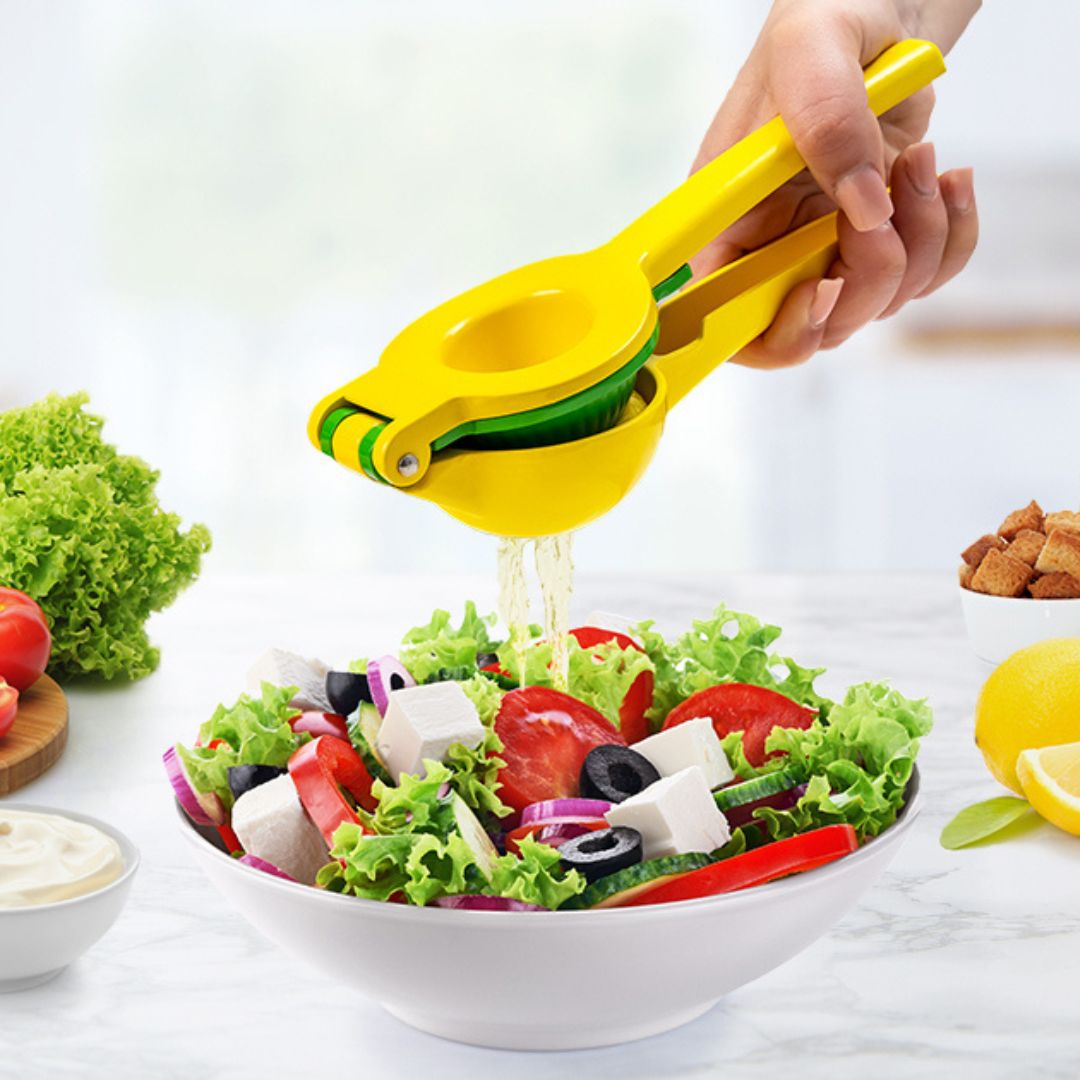
Handheld citrus squeezers are compact and easy to store, making them convenient for occasional use or small quantities. However, they rely entirely on grip strength to generate pressure. A cast-iron juicer, by contrast, uses leverage and weight to do the work. Its heavy base provides stability, while the pressing mechanism applies even, controlled force across the fruit. This results in higher juice extraction with less effort, making it particularly effective when juicing multiple lemons, limes, or oranges at once. The consistent pressure also reduces bitterness caused by over-squeezing peels, which can happen with handheld tools.
For many households, yes. If you want the best manual citrus juicer for home, cast-iron models offer unmatched longevity, power, and versatility. They excel at fresh juice without machine hassle and fit seamlessly into both everyday cooking and cocktail prep tool collections.
What Citrus Juicer to Get?
If you’re looking for a juicer that combines durability, efficiency, and versatility, a manual cast iron juicer is hard to beat, especially one designed for more than just citrus. The Zulay Kitchen Pulperizer 9-in-1 Cast Iron Juicer is a standout option for home cooks who want consistent results without relying on electric machines.

What sets this juicer apart is its versatility. Beyond citrus, the 9-in-1 design supports a wide range of kitchen tasks, making it more than a single-purpose tool. For those building a reliable collection of kitchen citrus tools or upgrading their cocktail prep tools, this juicer fits seamlessly into daily cooking, drink prep, and meal planning.
Final Thoughts
Manual juicing is about control, consistency, and quality. A cast-iron juicer brings all three together in a tool that has stood the test of time. With proper care and cleaning, it delivers reliable performance for everything from fresh juice at home to cocktails, marinades, and everyday meal prep.
If you regularly juice citrus or value tools that are built to last, investing in a cast-iron juicer can simplify your workflow while improving results. Explore well-made manual juicers and supporting kitchen tools designed to make prep easier, cleaner, and more efficient because the best tools are the ones you reach for again and again.
Shop the Zulay Kitchen Citrus Collection »



Leave a comment
This site is protected by hCaptcha and the hCaptcha Privacy Policy and Terms of Service apply.