






Best Tools for Making Fresh Juice
Fresh juice has become a daily habit for many home cooks, and for good reason. Making juice at home allows you to control every ingredient that goes into your glass, from the quality of the produce to the amount of sugar, pulp, or additives. Compared to store-bought options, homemade juice offers a brighter flavor, fresher taste, and the satisfaction of knowing exactly what you’re consuming.
In fact, studies on juice extraction show that manual citrus presses can extract comparable, or even higher, juice yields than electric juicers while producing less heat, which helps preserve flavor and certain heat-sensitive nutrients. This is one reason chefs and bartenders often prefer manual tools for fresh citrus juice.
In this guide, we’ll break down the best tools for making fresh juice, explain when each one works best, and help you choose the right options for your kitchen, so you can enjoy fresh, flavorful juice without unnecessary complexity.
Manual Citrus Juicers – A Powerful and Essential Tool
When it comes to juicing citrus fruits, few tools are as efficient, reliable, and underrated as the manual citrus juicer. Manual citrus juicers excel with soft, high-juice fruits that have natural segments and thin membranes. Lemons and limes for salad dressings, oranges for breakfast juice, or grapefruits for refreshing afternoon drinks can all be juiced quickly without peeling, chopping, or a complicated setup. Unlike centrifugal or masticating electric juicers, citrus juicers are purpose-built, which means they do one job exceptionally well.

They’re especially useful for small-batch juicing. If you only need a few tablespoons of lemon juice for a vinaigrette or a single glass of orange juice, pulling out an electric juicer can feel unnecessary. A manual citrus juicer delivers fresh juice in seconds with minimal cleanup.
Handheld Squeezers vs. Countertop Press-Style Juicers
There are two main types of manual citrus juicers, and each serves a slightly different purpose.
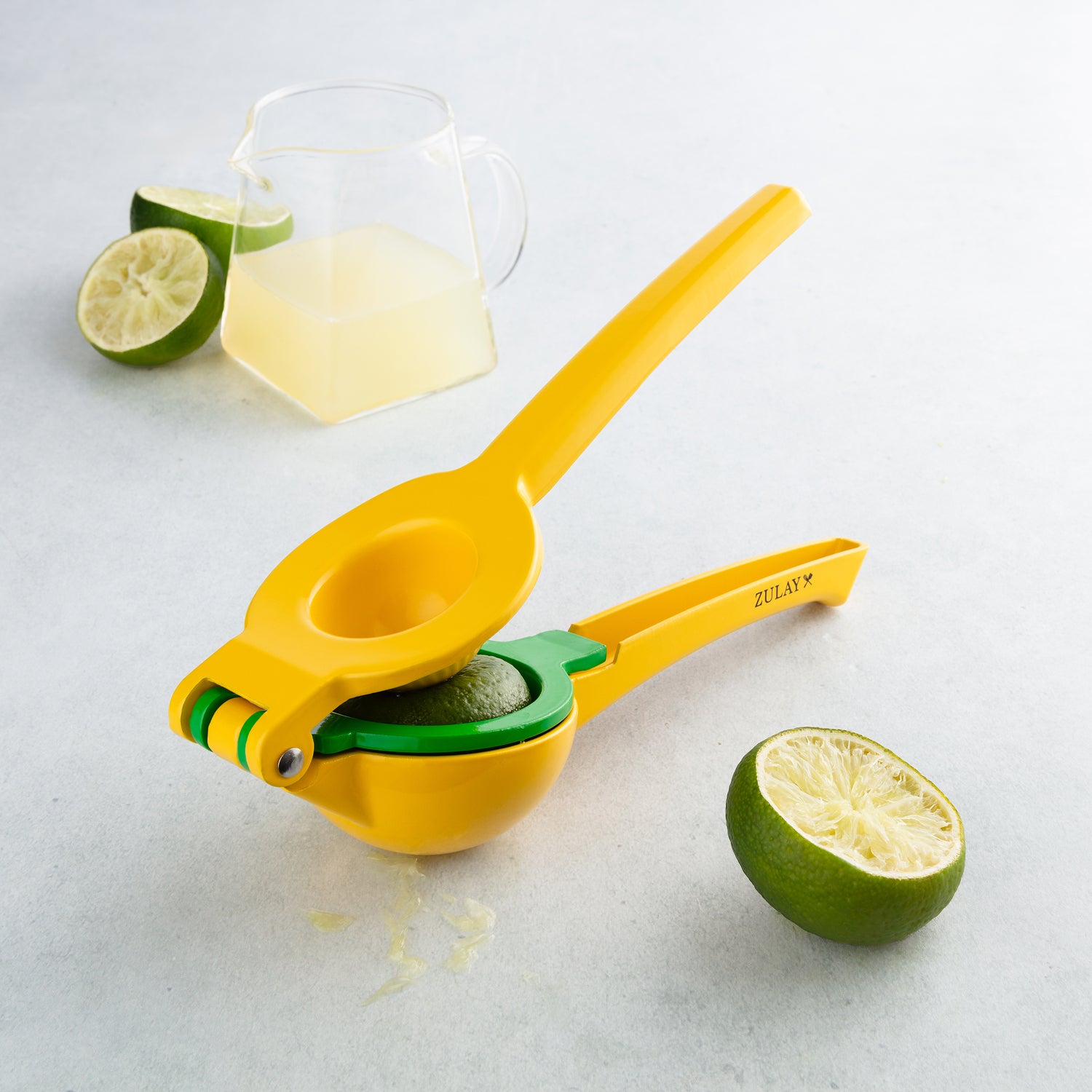
Handheld citrus squeezers are compact, lightweight, and ideal for quick tasks. They’re perfect for lemons and limes and work by applying direct pressure through a hinged design. These tools are easy to store, easy to clean, and excellent for everyday cooking. Many include built-in seed filtration, like our Zulay Kitchen 2-in-1 lemon squeezer, keeping pits out of your juice without requiring a separate strainer.

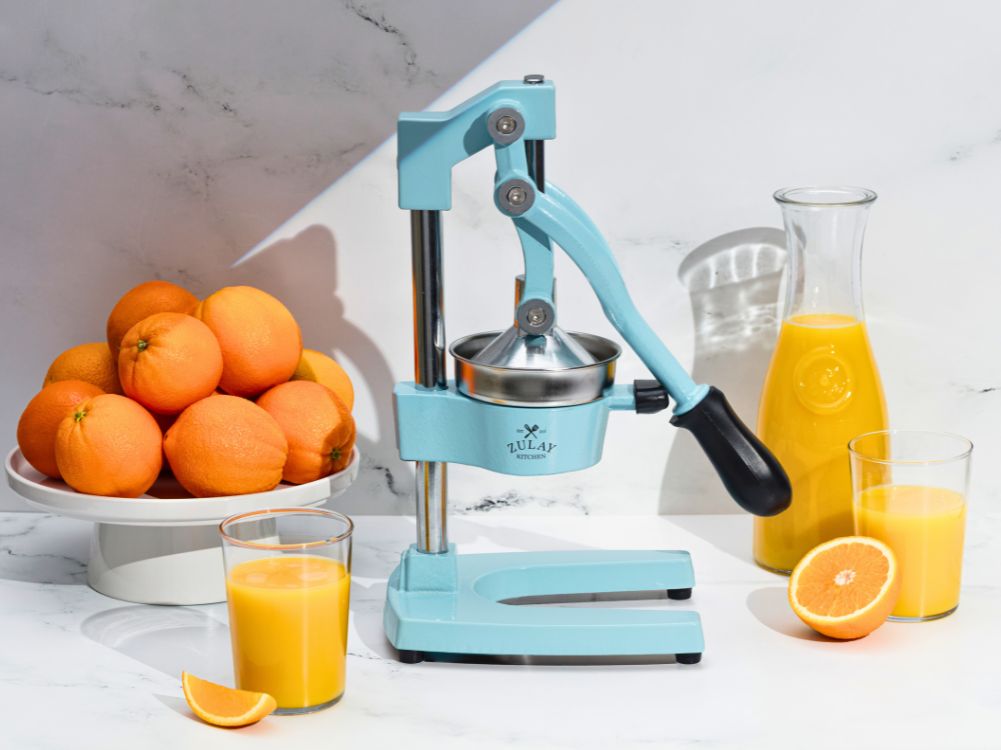
Countertop press-style citrus juicers, on the other hand, offer greater leverage. With a stable base and long handle, they use mechanical advantage to extract more juice with less effort. These are particularly useful for larger fruits like oranges and grapefruits or for anyone who juices citrus frequently. The downward pressing motion reduces strain on hands and wrists while maximizing juice yield.
Leverage, Seed Filtration, and Juice Yield
One of the biggest advantages of manual citrus juicers is control. The pressure you apply determines how much juice is extracted, allowing you to stop before crushing bitter pith into the juice. Many electric juicers spin at high speeds, which can rupture membranes and introduce bitterness. Manual juicers give you precision.
Seed filtration is another major benefit. Most citrus juicers are designed to catch seeds automatically, which means cleaner juice without extra straining. This is especially helpful when juicing lemons or limes for recipes where clarity and texture matter.

In terms of yield, manual juicers often surprise people. Because they apply direct pressure instead of centrifugal force, they can extract a high percentage of juice, especially from citrus that’s been properly rolled or brought to room temperature. For citrus fruits specifically, manual extraction is often just as efficient, if not more so, than electric alternatives.
Electric Citrus Juicers – Built for High-Volume Juicing
For households where fresh juice is more than an occasional treat, an electric citrus juicer can be a practical upgrade. If you’re juicing multiple oranges every morning, preparing large batches for family breakfasts, or hosting brunches and events, the speed and consistency of an electric citrus juicer can save significant time and effort. Instead of repeatedly squeezing fruit by hand, the motor does the work, producing steady results with minimal physical effort.

They’re also useful when consistency matters. Electric juicers apply uniform pressure and rotation, which helps produce predictable juice output when working with larger quantities of fruit.
Pros and Cons Compared to Manual Juicers
The biggest advantage of electric citrus juicers is speed. They process fruit quickly and require less manual effort, making them ideal for busy mornings. Many models include auto-start functions, where pressing the fruit activates the motor, keeping the operation simple.
However, electric juicers tend to take up more counter or storage space and require access to power. They also involve more components, which can mean longer cleaning time compared to a simple manual squeezer. While they’re efficient, they may extract slightly less juice per fruit than a well-used press-style manual juicer, particularly if the fruit is not fully ripe.
In terms of flavor, electric juicers can introduce slight warmth due to motor activity, though this is minimal in modern designs. For most people, the convenience outweighs these small trade-offs when juicing at scale.
Commercial Orange Juice Machines for Homes, Events, and Small Businesses
For many home cooks, manual citrus juicers and electric citrus juicers handle everyday needs beautifully. But what if you entertain regularly, run a bed-and-breakfast, or simply go through juice faster than you expect? That’s where a commercial orange juice machine becomes worth considering. Designed for high throughput and continuous use, these machines bring professional-level efficiency into the home or small business kitchen.
These machines are especially popular for events and gatherings. Brunches, parties, weddings, and catered occasions often require large quantities of juice in a short amount of time. A commercial orange juice machine can produce glass after glass quickly, without overheating or slowing down. Guests enjoy fresh-squeezed juice on demand, while hosts avoid the mess, fatigue, and time commitment of manual juicing.

Zulay Kitchen’s commercial orange juice machine is built with this versatility in mind. It combines high-capacity performance with a user-friendly design that works just as well in a home kitchen as it does in a business setting. Easy-to-clean parts, durable materials, and efficient juice extraction make it ideal for anyone who values speed, reliability, and freshness. In short, a commercial orange juice machine isn’t just for large-scale operations. It’s a smart solution for anyone who wants fresh juice at scale, with less effort and better results every time.
When a Commercial Machine Makes Sense
While a commercial orange juice machine might be overkill for occasional squeezing, it becomes a game-changer when:
-
- You juice citrus daily for multiple people
- You entertain frequently or host large brunches
- You want to produce juice quickly without fatigue
- You value consistency and professional output
- You’re running a small food business or hospitality space
In these cases, the investment pays off through convenience, superior yield, and reduced prep effort.
Graters, Zesters, and Reamers
When people think about making fresh juice, they often picture juicers first. But some of the most impactful flavor-building tools are much smaller and easier to overlook. Graters, zesters, and manual reamers play a major role in elevating juice from simple to truly exceptional.
Citrus zest, for example, contains aromatic oils that dramatically enhance both flavor and aroma. Adding a small amount of lemon, lime, or orange zest to fresh juice creates a brighter, more complex taste that juice alone can’t achieve. This is why professional chefs and bartenders almost always incorporate zest into citrus-based drinks. A fine zester allows you to extract these oils without digging into the bitter white pith beneath the peel.
Graters are equally valuable for fresh juice recipes that include ginger, turmeric, or even citrus peel. Freshly grated ginger adds a spicy warmth and natural sweetness that powdered versions can’t replicate. Turmeric, when grated fresh, brings depth, color, and nutritional benefits to juice blends. These tools help you unlock flavors that stay bold and balanced, even when diluted with fruit juice.

Manual citrus reamers are another quiet essential. They’re compact, inexpensive, and surprisingly effective, especially for small citrus fruits like lemons and limes. When you don’t want to pull out a larger juicer, a reamer offers a quick way to extract juice for a single glass, a dressing, or a cocktail. Many professionals rely on reamers for speed and control, particularly when precision matters more than volume.
Strainers and Filters – For better texture & better results
One of the most common complaints about fresh juice is pulp. While some people enjoy a thicker texture, others prefer a smooth, clean finish. This is where strainers and filters become essential tools.
Straining juice isn’t always necessary, but knowing when to do it makes a noticeable difference. Green juices made from leafy vegetables often benefit from straining to remove fibrous bits that affect mouthfeel. Citrus blends can also feel more refined when excess pulp and seeds are filtered out, especially for cocktails or presentation-focused drinks.
Fine mesh strainers are ideal for this purpose. They remove small particles while allowing liquid to flow freely, preserving flavor without thinning the juice. Colanders, on the other hand, work well for larger batches or thicker juices where full filtration isn’t required. Each has its place, depending on the texture you’re aiming for.

Containers and Storage Tools
Making fresh juice is only half the process. Proper storage is what preserves flavor, nutrients, and overall quality once the juicing is done. Without the right containers, even the best juice can lose its appeal quickly.
Airtight containers are critical because exposure to air accelerates oxidation. Oxidation affects both taste and nutritional value, causing juice to dull in flavor and color. Sealing juice properly slows this process and helps maintain freshness for longer periods.
Glass containers are generally the best option for storing fresh juice. They don’t absorb odors, don’t stain, and don’t interact with acidic ingredients like citrus. Plastic containers, while lightweight and convenient, can retain flavors and degrade over time. If plastic is used, it should always be BPA-free and specifically designed for food storage.
Common Juicing Mistakes (and How the Right Tools Prevent Them)
1. Using the wrong tool for the ingredient
Not all fruits and vegetables respond the same way to juicing. Citrus fruits perform best with manual or electric citrus juicers, while dense vegetables and leafy greens require stronger extraction methods. Matching the tool to the ingredient improves juice yield, preserves flavor, and reduces unnecessary effort.
2. Overworking electric juicers
Running an electric juicer continuously without breaks can strain the motor and shorten its lifespan. Quality juicing tools are designed for appropriate workloads, making the process smoother, more efficient, and far more reliable over time.
3. Skipping straining when it’s needed
While some juices benefit from added texture, others suffer from excess pulp or fibrous bits. Skipping straining can result in a gritty or unpleasant mouthfeel, especially in green or citrus-heavy juices. A simple fine-mesh strainer can dramatically improve smoothness and overall enjoyment.
4. Neglecting proper cleaning habits
Residue left behind in juicing tools can transfer flavors, cause odors, and affect the taste of future batches. Tools that are easy to disassemble and clean encourage better maintenance and help keep flavors fresh and consistent.
5. Letting frustration replace consistency
When tools feel difficult to use or maintain, juicing quickly becomes a chore. The right tools remove friction from the process, saving time, reducing waste, and making fresh juice something you actually look forward to preparing.
Final Thoughts
Making fresh, delicious juice at home doesn’t have to be complicated. In fact, the key to success is choosing the right tools for your needs. The right juicing tools make the process faster, cleaner, and more enjoyable. Don’t be afraid to experiment. Try different fruits, mix textures, and even play with spices or herbs. Small upgrades, like a quality citrus press, a fine strainer, or an easy-to-clean juicer, can transform your daily routine and help you build healthier habits without stress.
Shop the Zulay Kitchen Citrus Collection »


Leave a comment
This site is protected by hCaptcha and the hCaptcha Privacy Policy and Terms of Service apply.